Responding to Stereotypes


Introduction
Stereotypes exist for a reason: many people are too intellectually lazy to evaluate other people on an individual, case-by-case basis, and instead assume things about individuals because they belong to a group.
Social-cognitive research frames this in terms of cognitive economy — stereotypes operate as mental shortcuts that conserve processing resources, which is part of why they are so persistent.
Stereotypes are oversimplifications and do not represent the diversity and variation within a group. In fact, many people systematically underestimate the variability of groups to which they do not belong, an effect known as the out-group homogeneity effect.
How to Respond to Someone Who Frequently Stereotypes Others
What you can do:
• Highlight Individual Differences: Point out that individuals within any group can vary significantly. Shifting attention from group categories to a person’s specific attributes — a process called individuation — reduces reliance on stereotypes.
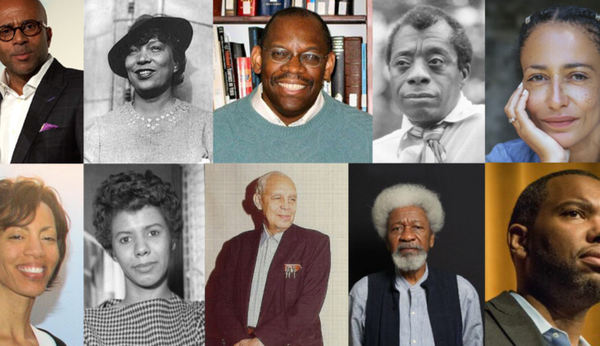
• Highlight Counterexamples/Countertypes: Share counterexamples or stories that defy the stereotype, illustrating that individual experiences and behaviors vary widely within any given group. Exposure to admired, counter-stereotypic examples has been shown to weaken automatic bias.
• Challenge Stereotypes: Explain that relying on stereotypes can lead to discrimination and harm. Encourage a more nuanced and individualized perspective, where each person is assessed based on their unique qualities and actions.
• Discuss Confirmation Bias: Mention that people tend to notice and remember information that confirms their (pre)existing beliefs. This contributes to the perpetuation of stereotypes and the overlooking of contradictory evidence.
• Consider the Cultural and Historical Context: Consider the historical and cultural factors that may have contributed to the formation of stereotypes. Discuss how social, economic, and political factors can shape perceptions and contribute to the creation of stereotypes. Stereotypes are often used to justify disparities among groups — a function social psychologists describe as system justification.
• Promote Critical Thinking: Encourage a more critical approach to information and the recognition that stereotypes are often based on incomplete or exaggerated observations. The media often reinforce stereotypes; content analyses of local television news, for instance, have found Black Americans overrepresented as lawbreakers relative to actual crime data. Encourage individuals to question and challenge stereotypes rather than accepting them uncritically.
• Encourage Positive Personal Experiences with Individuals in the Stereotyped Group: Encourage individuals to engage in positive personal experiences and interactions with people from different backgrounds. This can help break down stereotypes by providing firsthand knowledge and fostering empathy. A large meta-analysis of intergroup contact research confirms that such contact typically reduces prejudice.
Remember to approach the conversation with empathy and understanding, as discussions about stereotypes can be touchy. Encourage open dialogue and a willingness to learn.
References
Allport, G. W. (1954). The nature of prejudice. Addison-Wesley.
Dasgupta, N., & Greenwald, A. G. (2001). On the malleability of automatic attitudes: Combating automatic prejudice with images of admired and disliked individuals. Journal of Personality and Social Psychology, 81(5), 800–814.
Dixon, T. L., & Linz, D. (2000). Overrepresentation and underrepresentation of African Americans and Latinos as lawbreakers on television news. Journal of Communication, 50(2), 131–154.
Fiske, S. T., & Neuberg, S. L. (1990). A continuum of impression formation, from category-based to individuating processes: Influences of information and motivation on attention and interpretation. In M. P. Zanna (Ed.), Advances in experimental social psychology (Vol. 23, pp. 1–74). Academic Press.
J. T., & Banaji, M. R. (1994). The role of stereotyping in system-justification and the production of false consciousness. British Journal of Social Psychology, 33(1), 1–27.
Macrae, C. N., Milne, A. B., & Bodenhausen, G. V. (1994). Stereotypes as energy-saving devices: A peek inside the cognitive toolbox. Journal of Personality and Social Psychology, 66(1), 37–47.
Nickerson, R. S. (1998). Confirmation bias: A ubiquitous phenomenon in many guises. Review of General Psychology, 2(2), 175–220.
Pettigrew, T. F., & Tropp, L. R. (2006). A meta-analytic test of intergroup contact theory. Journal of Personality and Social Psychology, 90(5), 751–783.
Quattrone, G. A., & Jones, E. E. (1980). The perception of variability within in-groups and out-groups: Implications for the law of small numbers. Journal of Personality and Social Psychology, 38(1), 141–152.