Positively Representing Black Women

Introduction
It's not that some Black women are stereotypical, and others aren't. It's that media, including social media, disproportionately amplifies a narrow set of images (combative, aggressive, loud, tacky, and exaggerated) while under-representing Black women whose work is intellectual, classical, technical, or quietly accomplished.
The Under-Amplified
Black women who are measured and civil and have dignity are less likely to be represented in media. Please note that I reject respectability politics, implying the "loud" women are doing something wrong by existing. If someone's behavior doesn't directly harm others, the behavior is usually acceptable.
Also, recall that bias is singling out and being preoccupied with a group and repeating the same tropes about the group over and over again. The question isn't who behaves "acceptably" or positively but what does the media reward with attention, and why, which points at the incentive structure rather than at the women themselves.
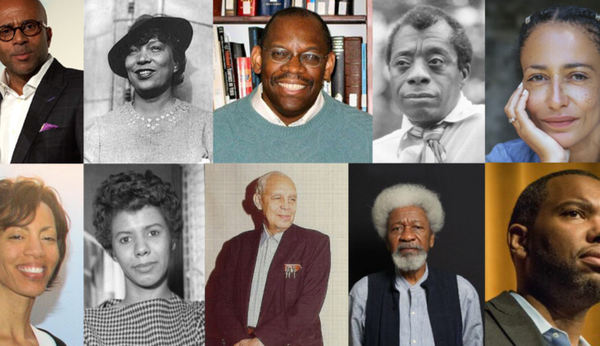
I've curated a list of high achieving but under-amplified Black women.
Classical Music
Science and engineering
Writing
Law, business, public service
Classical arts
Acting
Sources
1. Controlling images and the narrow stereotype set
Collins, P. H. (1986). Learning from the outsider within: The sociological significance of Black feminist thought. Social Problems, 33(6), S14–S32. https://doi.org/10.2307/800672
Collins, P. H. (2000). Black feminist thought: Knowledge, consciousness, and the politics of empowerment (2nd ed.). Routledge.
West, C. M. (1995). Mammy, Sapphire, and Jezebel: Historical images of Black women and their implications for psychotherapy. Psychotherapy: Theory, Research, Practice, Training, 32(3), 458–466. https://doi.org/10.1037/0033-3204.32.3.458
2. Empirical amplification in media content
Glascock, J., & Preston-Schreck, C. (2018). Verbal aggression, race, and sex on reality TV: Is this really the way it is? Journal of Broadcasting & Electronic Media, 62(3), 427–444. https://doi.org/10.1080/08838151.2018.1451859
Cox, V., & Ward, L. M. (2019). A wholistic view of Black women on scripted TV: A content analysis. Journal of Black Psychology. Advance online publication. https://doi.org/10.1177/0095798419887072
3. Under-representation and invisibility of non-stereotyped Black women
Purdie-Vaughns, V., & Eibach, R. P. (2008). Intersectional invisibility: The distinctive advantages and disadvantages of multiple subordinate-group identities. Sex Roles, 59(5–6), 377–391. https://doi.org/10.1007/s11199-008-9424-4
Harris-Perry, M. V. (2011). Sister citizen: Shame, stereotypes, and Black women in America.Yale University Press.
4. Respectability politics and the rejection of the “loud equals wrong” premise
Higginbotham, E. B. (1993). Righteous discontent: The women’s movement in the Black Baptist church, 1880–1920. Harvard University Press.
Walley-Jean, J. C. (2009). Debunking the myth of the “angry Black woman”: An exploration of anger in young African American women. Black Women, Gender & Families, 3(2), 68–86.
5. Incentive structure: what media rewards with attention
Brady, W. J., Wills, J. A., Jost, J. T., Tucker, J. A., & Van Bavel, J. J. (2017). Emotion shapes the diffusion of moralized content in social networks. Proceedings of the National Academy of Sciences, 114(28), 7313–7318. https://doi.org/10.1073/pnas.1618923114
Brady, W. J., McLoughlin, K., Doan, T. N., & Crockett, M. J. (2021). How social learning amplifies moral outrage expression in online social networks. Science Advances, 7(33), Article eabe5641. https://doi.org/10.1126/sciadv.abe5641