What is Black Culture?

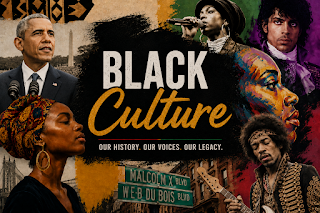
In the schools I attended, and now across social media, especially conservative media and conservative influencers, the term “Black culture” is often used in a negative way to describe behaviors such as flash mobs (group shoplifting), dining and dashing, disruptive conduct after a basketball game, twerking, dysfunction, and so on, especially among young Black people.
This use of “Black culture” typically equates it with “ghetto” or “ratchet” behavior, a framing that scholars trace to respectability politics and its policing of Black expression (Cooper, 2017), and I oppose this usage. Because the term “Black culture” is so frequently used with negative connotations, I rarely use it. Sometimes, I say Black high culture to show that there are positive aspects of the Black community.
Importantly, every racial group includes individuals who engage in harmful or negative behavior; however, these actions are not typically labeled as reflective of the group’s “culture.” This selective labeling reflects what Collins (2000) calls “controlling images,” stereotypes that attach social ills, dysfunction, and pathology to Black people specifically in order to make their subordination and marginalization appear natural.
Therefore, I want to share an affirming definition of Black culture, based on critical thinking - one that counters common stereotypes and negativity and instead recognizes its richness, diversity, and historical depth. This definition centers dignity, creativity, and resilience.
Definition of Black Culture (Non-Stereotypical, Affirming)
Black culture refers to the diverse and evolving traditions, values, artistic expressions, and social and intellectual contributions of people of African descent, shaped by centuries of history, resistance, resilience, and innovation across the African diaspora (Gilroy, 1993). It encompasses:
• Creative excellence in music, fashion, literature, and visual arts, from jazz to rock and roll, genres that originated in African American communities and reshaped global popular music (Burnim & Maultsby, 2006).
• Contributions to science, technology, engineering, and mathematics, with many notable Black innovators and scientists (Carey, 2008).
• Community-centered values such as mutual aid, intergenerational care, and collective resilience, expressed historically through benevolent societies, cooperatives, and other institutions of self-help (Gordon Nembhard, 2014).
• Historical consciousness rooted in the legacies of African civilizations, the transatlantic slave trade, emancipation, the civil rights movement, and ongoing movements for justice (Du Bois, 1903).
• Cultural hybridity that blends African, Caribbean, Latin American, and American influences, constantly evolving through migration, adaptation, and global exchange (Gilroy, 1993).
• Intellectual and political leadership in philosophy, science, education, and activism, from W.E.B. Du Bois to Angela Davis to Barack Obama to contemporary thinkers and organizers (Davis, 1981).
This definition rejects reductionism and honors the complexity of Black life and identity. It is not monolithic; it varies by region, generation, and lived experience (Collins, 2000).
References
Burnim, M. V., & Maultsby, P. K. (Eds.). (2006). African American music: An introduction. Routledge.
Carey, C. W., Jr. (2008). African Americans in science: An encyclopedia of people and progress. ABC-CLIO.
Collins, P. H. (2000). Black feminist thought: Knowledge, consciousness, and the politics of empowerment (2nd ed.). Routledge.
Cooper, B. C. (2017). Beyond respectability: The intellectual thought of race women. University of Illinois Press.
Davis, A. Y. (1981). Women, race & class. Random House.
Du Bois, W. E. B. (1903). The souls of Black folk. A. C. McClurg.
Gilroy, P. (1993). The Black Atlantic: Modernity and double consciousness. Harvard University Press.
Gordon Nembhard, J. (2014). Collective courage: A history of African American cooperative economic thought and practice. Pennsylvania State University Press.